

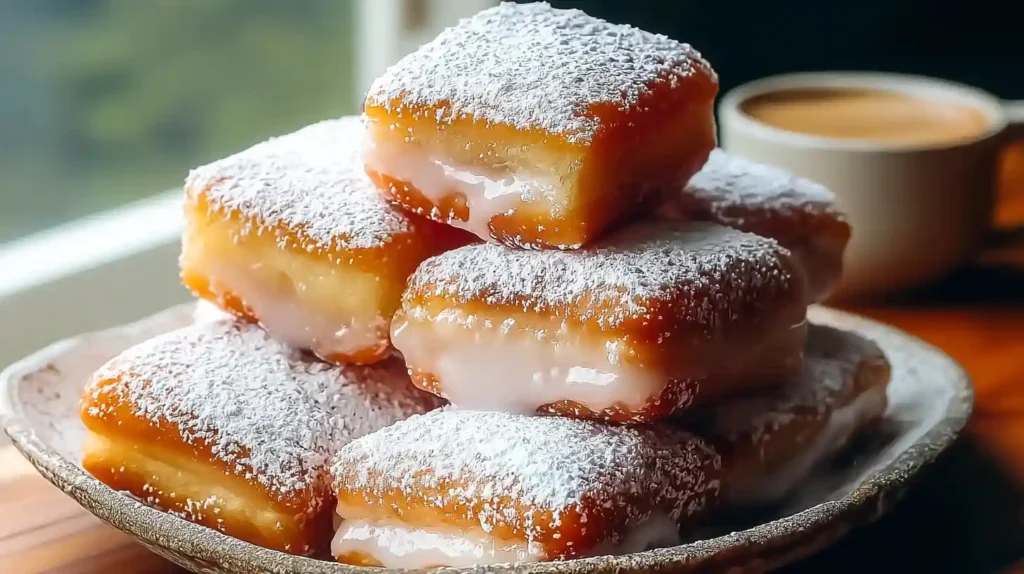
Beignets have a reputation for being fussy, but honestly, once you understand the dough they are one of the more forgiving fried pastries out there. This Buttermilk Beignet Square recipe uses the tang of buttermilk to build flavor and tenderness right into the dough, which means the finished result is softer inside and just a little more complex than the standard version. The squares puff up beautifully in hot oil, and with a proper pastry glaze or a heavy cloud of powdered sugar, they are hard to beat fresh out of the fryer.
If you have been looking for ideas on what to make with buttermilk sitting in the back of your fridge, this is a solid answer. The acid in the buttermilk reacts with the yeast in a way that gives the dough a gentle lift and a flavor that plain milk simply cannot match. These are not overly sweet on their own, which makes the glaze step feel necessary rather than extra.
Everything You Need for Buttermilk Beignet Squares
- 2 1/4 teaspoons active dry yeast (1 standard packet)
- 1/4 cup warm water (around 110°F)
- 1 cup buttermilk, warmed slightly
- 1/4 cup granulated sugar
- 1/2 teaspoon salt
- 1 large egg, room temperature
- 2 tablespoons unsalted butter, melted
- 3 1/2 cups all-purpose flour, plus more for dusting
- Vegetable oil for frying (about 3 to 4 cups)
- 2 cups powdered sugar for dusting
For the Pastry Glaze (Optional)
- 1 cup powdered sugar
- 2 tablespoons whole milk or buttermilk
- 1/2 teaspoon pure vanilla extract
Step-by-Step Method for Making Buttermilk Beignet Squares
- Combine warm water and yeast in a large bowl and let it sit for 5 to 7 minutes until foamy. If it does not foam, your yeast is likely expired and the dough will not rise properly.
- Add the warmed buttermilk, sugar, salt, egg, and melted butter to the yeast mixture. Stir until combined.
- Add the flour one cup at a time, mixing after each addition. Once it forms a soft dough, turn it out onto a lightly floured surface and knead for about 5 minutes until smooth and slightly tacky but not sticky.
- Place the dough in a lightly oiled bowl, cover with a clean kitchen towel, and let it rise in a warm spot for 1 hour to 1 hour 30 minutes, until doubled in size.
- Once risen, punch the dough down gently and roll it out on a floured surface to about 1/4 inch thickness.
- Cut into 2 to 3 inch squares using a sharp knife or a bench scraper. Re-roll scraps once.
- Heat oil in a deep heavy pot to 365°F (185°C). Fry the squares in small batches, about 3 at a time, for 1 to 2 minutes per side until deep golden brown.
- Remove with a slotted spoon and drain on paper towels. Dust immediately with powdered sugar, or dip into the prepared glaze while still warm.
- For the glaze, whisk powdered sugar, milk, and vanilla together until smooth and thin enough to drizzle. Adjust with a few drops more milk if needed.
Key Tips for Frying Without Stress
Oil temperature is the single most important variable here. Too cool and the beignets absorb the oil before they form a crust, leaving them greasy and dense. Too hot and the outside browns before the inside cooks through. Keep a thermometer in the oil and adjust the flame between batches. The temperature drops each time you add dough, so give it a minute to recover before frying the next batch. Also, do not overcrowd the pot, three squares at a time is the right amount for consistent results. This applies to most yeast recipes for baking desserts that involve frying.
Substitutions and Dough Variations
No buttermilk? Make a quick substitute by adding one tablespoon of white vinegar or lemon juice to a cup of regular milk, letting it sit for 5 minutes before using. The result is very close. For baking recipes without milk entirely, a plain unsweetened oat milk or soy milk with the same vinegar trick works surprisingly well and still gives you a tender crumb. You can also add a teaspoon of cinnamon or cardamom to the dough for a spiced version, which pairs beautifully with a vanilla glaze. If you want glazed beignets with a chocolate finish, melt 2 ounces of dark chocolate into the glaze instead of using plain powdered sugar.
Troubleshooting Flat or Dense Beignets
Flat beignets almost always come down to under-proofing. If the dough has not fully doubled during the rise, the squares will not puff in the oil the way they should. Give the dough a full rise, and if your kitchen is cold, put the covered bowl in an oven with just the light on. Dense texture usually means the dough was worked too hard after the rise, or the oil was not hot enough. Roll gently and fry at the right temperature consistently. Also, make sure you are using active dry yeast and not baking powder, these are yeasted doughnuts, and the two leaveners behave very differently in recipes with yeast for baking.
Storage and How to Serve Them
Beignets are at their best within the first hour after frying. The exterior stays light and the interior stays airy. After a few hours, the dough softens and the powdered sugar absorbs into the surface. If you need to store them, keep them in a single layer in an airtight container at room temperature for up to one day. Reheat in the oven at 325°F for 5 to 6 minutes to revive some of the texture. Do not refrigerate, the cold makes them go stale faster. If you want to prep ahead, the dough can be made, shaped into squares, and refrigerated overnight on a parchment-lined tray. Pull them out 30 minutes before frying to take the chill off.
FAQ
Can I bake these instead of frying them? You can, but they will not be beignets in the traditional sense. Baked versions come out more like soft rolls. If you want to bake, brush them with melted butter and bake at 375°F for 12 to 14 minutes. The texture will be different but still pleasant.
Why is my dough too sticky to roll out? Sticky dough usually means slightly too much buttermilk or not enough flour. Add flour one tablespoon at a time until the dough pulls away from the surface cleanly but still feels soft. Do not add too much or the beignets become tough.
Can I use instant yeast instead of active dry yeast? Yes. Use the same amount and skip the proofing step in warm water. Mix the instant yeast directly into the dry ingredients and proceed as normal. The rise time may be slightly shorter.
What oil is best for frying these squares? A neutral oil with a high smoke point works best, vegetable oil, canola oil, or peanut oil are all reliable choices. Avoid olive oil, it smokes too quickly and adds a flavor that does not suit fried pastry well.
How do I know when the beignets are cooked through? They should be deep golden brown on both sides and feel light when lifted with the slotted spoon. If they feel heavy or doughy when you press them gently, they need another 30 to 45 seconds in the oil.
Can I make the dough the night before? Yes. After shaping the squares, place them on a parchment-lined tray, cover tightly with plastic wrap, and refrigerate overnight. The cold slows the rise. Take them out 30 minutes before frying to bring them back to room temperature.
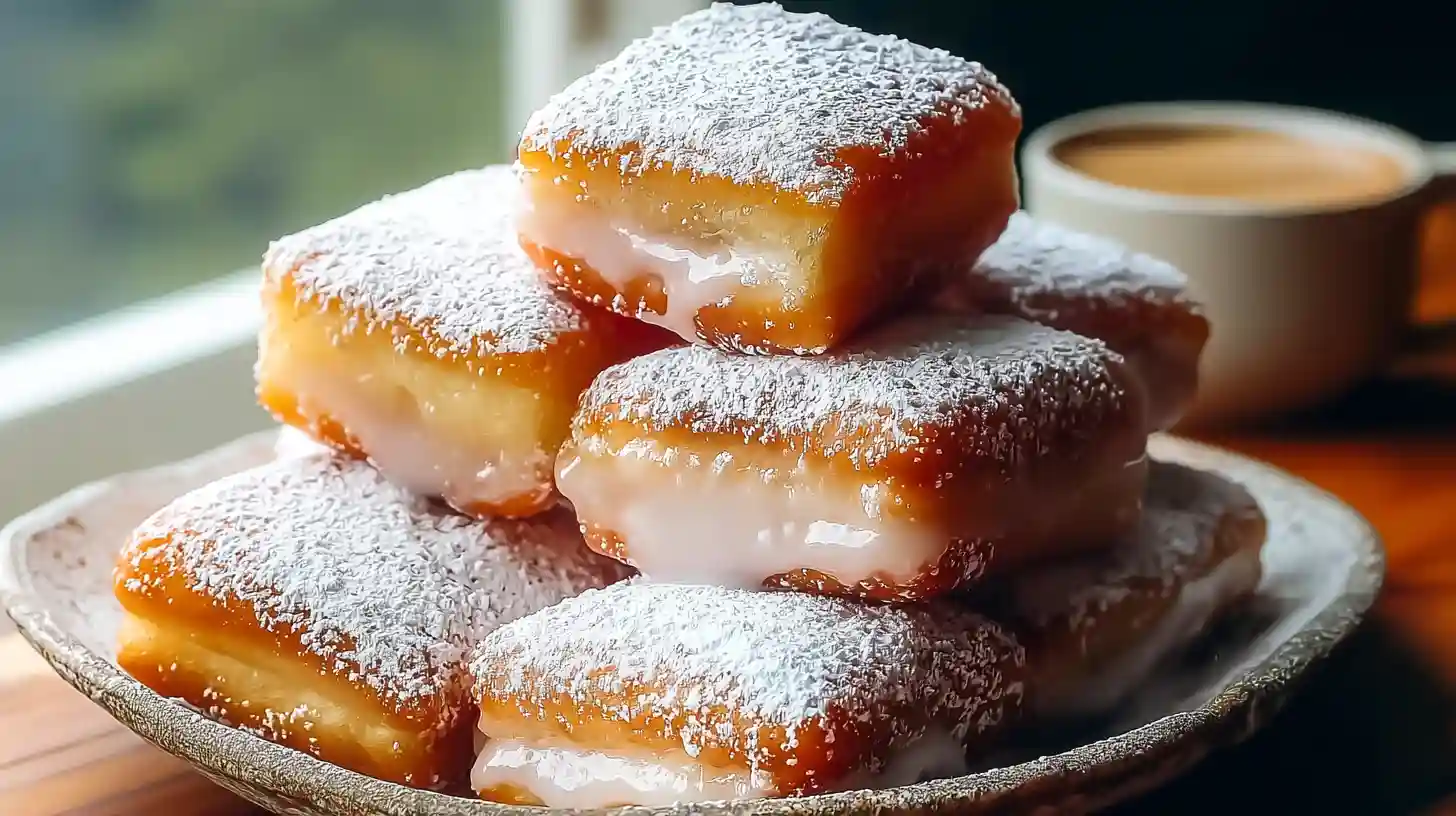
Buttermilk Beignet Square
Ingredients
Equipment
Method
- Proof the yeast by combining warm water and yeast in a large bowl. Let sit 5 to 7 minutes until foamy.
- Add wet ingredients: Mix in warmed buttermilk, sugar, salt, egg, and melted butter until combined.
- Build the dough by adding flour one cup at a time, then knead on a floured surface for 5 minutes until smooth and slightly tacky.
- First rise: Place dough in an oiled bowl, cover, and let rise 1 to 1.5 hours until doubled.
- Shape: Punch down dough, roll to 1/4 inch thickness, and cut into 2 to 3 inch squares.
- Heat oil in a deep pot to 365°F (185°C). Fry squares in batches of 3 for 1 to 2 minutes per side until deep golden brown.
- Drain and finish: Remove with a slotted spoon, drain on paper towels, and dust with powdered sugar or dip in glaze while warm.
- Make the glaze by whisking powdered sugar, milk, and vanilla until smooth. Drizzle or dip beignets as desired.
Notes
- Oil must stay at 365°F between batches – use a thermometer.
- Do not overcrowd the pot – fry 3 squares at a time for best results.
- Dough can be shaped and refrigerated overnight before frying.
- Best served within 1 hour of frying for optimal texture.


