
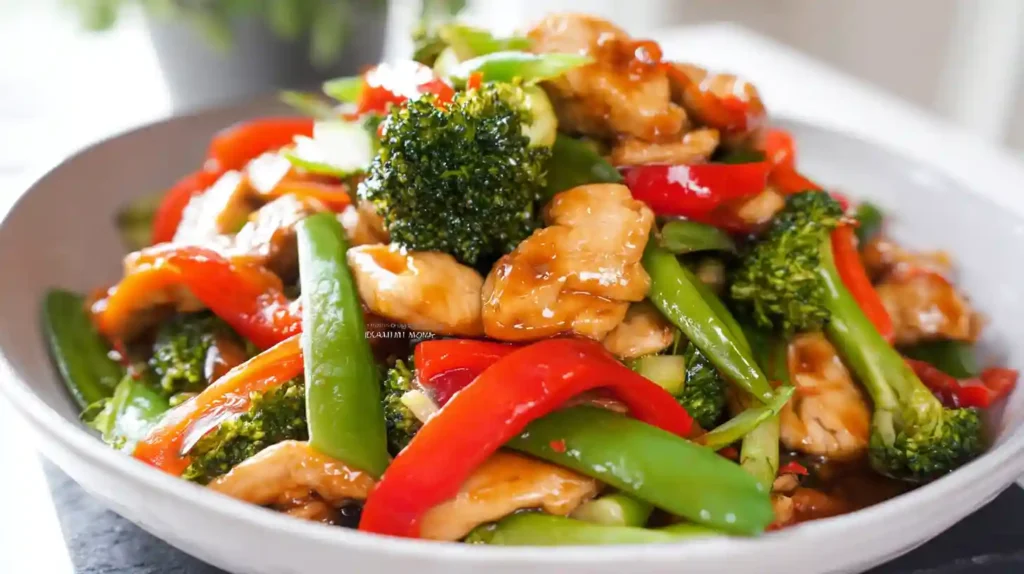
There is something incredibly satisfying about hearing the sizzle of a hot wok on a Tuesday night. This Chicken with Mixed Vegetable Stir Fry is exactly the kind of meal that saves you when the fridge looks half-empty but you are craving something savory and comforting. It comes together faster than delivery, and honestly, the texture of fresh, crisp vegetables beats soggy takeout containers every single time. You get tender bites of chicken coated in a glossy, savory sauce that clings perfectly to every piece of broccoli and pepper.
If you have been looking for quick weeknight dinner ideas that do not require a dozen exotic ingredients, this is it. The beauty here is in the technique rather than a complicated shopping list. By marinating the chicken briefly and controlling the heat, you avoid that rubbery texture that ruins so many homemade stir-frys. Plus, it is a fantastic way to clear out the vegetable drawer.
Why This Chicken with Mixed Vegetable Stir Fry Works
The secret to a great stir-fry isn’t just the sauce, it is the preparation. This recipe uses a method often called “velveting” in Chinese cooking, though we are doing a simplified home version. By coating the chicken in cornstarch and soy sauce before it hits the pan, you create a protective barrier. This keeps the juices inside while the outside gets a nice sear. It is what makes easy and simple chicken recipes feel like restaurant-quality meals.
Another reason this dish works so well is the balance of textures. We aren’t just throwing everything in at once to steam in a sad pile. We cook the hard vegetables first and the softer ones later, ensuring that the carrots have a bite while the snap peas stay crunchy. It turns a healthy vegetable stir-fry into something you actually want to eat, rather than something you feel like you should eat.
Ingredients for the Perfect Sauce
The sauce is the backbone of this dish. You want a balance of salty, savory, and just a hint of sweetness to tie the chicken stir fry with peppers together. Here is what you need to gather.
- Soy Sauce: I use regular soy sauce for saltiness. If you have dark soy sauce, add a teaspoon for a richer color, but it is not strictly necessary.
- Oyster Sauce: This adds that deep, umami flavor that makes Chinese chicken stir fry recipes taste authentic. Do not skip this.
- Sesame Oil: A little goes a long way. It provides a nutty aroma that hits you as soon as the sauce bubbles up.
- Cornstarch Slurry: A mix of cornstarch and water or chicken broth. This is crucial for thickening the sauce so it glazes the food instead of pooling at the bottom of the wok.
- Ginger and Garlic: Fresh is best here. Powdered versions just disappear into the background, while fresh aromatics provide that necessary punch.
Step-by-Step Cooking Instructions
Timing is everything when you learn how to make stir-fry at home. Once you turn on the heat, things move fast. I always recommend chopping all your vegetables and measuring your sauce ingredients before you even think about heating the pan.
1. Marinate the Chicken
Slice your chicken breast or thighs thinly against the grain. In a bowl, toss the chicken with a splash of soy sauce, a teaspoon of cornstarch, and a drizzle of oil. Let it sit for about 10 minutes while you chop the veggies. This step is non-negotiable for tender meat.
2. Sear the Meat
Get your skillet or wok ripping hot. Add oil and spread the chicken out in a single layer. Let it sear undisturbed for a minute before flipping. You want golden brown edges, not grey, steamed meat. Once it is about 80% cooked, remove it from the pan. This prevents it from drying out while the veggies cook.
3. Stir Fry the Veggies
Add a little more oil if the pan is dry. Toss in the harder vegetables like carrots and broccoli stems first. Stir fry them for 2 minutes. Then add the softer veggies like bell peppers, snap peas, and zucchini. Add a splash of water (about a tablespoon) and cover the pan for 30 seconds to steam them slightly. This creates a perfect easy chicken stir-fry recipe where the veggies are cooked but lively.
4. Sauce and Combine
Add the garlic and ginger, cooking for just 30 seconds until fragrant. Return the chicken to the pan. Give your sauce mixture a quick whisk (cornstarch settles fast) and pour it over everything. Toss constantly. The sauce will bubble and thicken rapidly, coating everything in a glossy sheen. Serve immediately as fried chicken with rice.
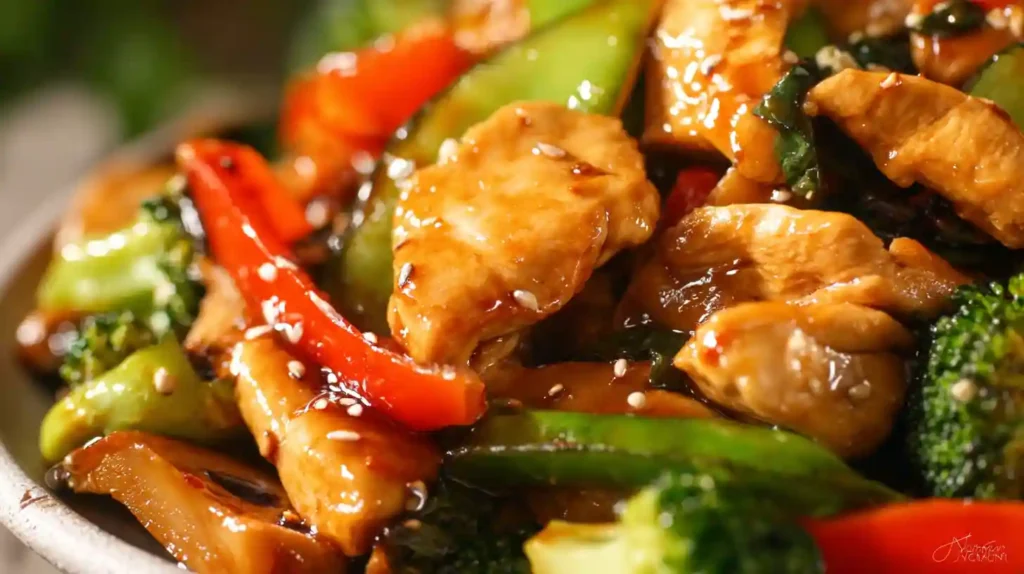
Vegetable Variations and Swaps
The best part about this recipe is its flexibility. You do not need to run to the store if you are missing one specific vegetable. The goal is color and crunch.
Baby Corn and Water Chestnuts: These add a classic crunch that reminds me of takeout. Rinse them well if they come from a can to remove the metallic taste.
Mushrooms: Shiitake or button mushrooms work beautifully. They act like sponges, soaking up that savory sauce. Add them early with the carrots as they take a moment to release their water and brown.
Leafy Greens: Bok choy or spinach are great additions for extra nutrition. However, add them at the very end, right before the sauce, or they will wilt into nothingness.
Common Mistakes to Avoid
Even with simple recipes, small errors can affect the final dish. One major issue is overcrowding the pan. If you put too much in the wok at once, the temperature drops drastically. Instead of searing, the food releases moisture and boils. If you have a small skillet, cook the chicken in two batches.
Another mistake is cutting vegetables into different sizes. Try to keep your pepper strips and carrot slices roughly the same size so they cook evenly. You don’t want raw carrots mixed with mushy zucchini.
Storage and Reheating Tips
This dish makes for excellent meal prep. Store any leftovers in an airtight container in the refrigerator for up to 3 or 4 days. Because the veggies are crisp-tender, they hold up well without turning to mush the next day.
To reheat, use a microwave or toss it back in a hot skillet for a minute. If you microwave it, sprinkle a few drops of water over the top before heating to help re-steam the rice and keep the chicken moist. Freezing is not recommended for this specific recipe because the vegetables, especially peppers and zucchini, tend to get watery and soft when thawed.
FAQ
Can I use frozen vegetables for this stir fry?
Yes, you can use a frozen stir-fry mix. However, frozen veggies release a lot more water. Thaw and drain them thoroughly before adding them to the hot pan, or cook them longer to evaporate the excess moisture so your sauce doesn’t get watery.
What is the best cut of chicken to use?
Boneless, skinless chicken thighs are the most forgiving and stay juicy even under high heat. Chicken breast works well too if you slice it thinly and don’t overcook it during the searing stage. The marinade helps protect breast meat from drying out.
How do I make the sauce thicker?
If your sauce looks too thin after cooking for a minute, mix another teaspoon of cornstarch with a tablespoon of cold water in a separate small bowl. Pour this into the bubbling sauce gradually until it reaches your desired consistency.
Can I make this gluten-free?
Absolutely. Swap the soy sauce for Tamari or coconut aminos. Also, check the label on your oyster sauce, as some brands contain wheat. There are plenty of gluten-free oyster sauce options available in most supermarkets.
Why does my stir fry taste bland?
Bland stir fry usually lacks salt or acidity. Try adding a splash more soy sauce or a tiny pinch of salt. Sometimes, a teaspoon of rice vinegar or a squeeze of lime at the very end can brighten up the flavors if they feel heavy or flat.
Do I need a wok to make this recipe?
No, a large non-stick skillet or a stainless steel frying pan works perfectly fine. The key is surface area. A wok helps with tossing, but a wide flat skillet is great for searing the chicken and veggies effectively.
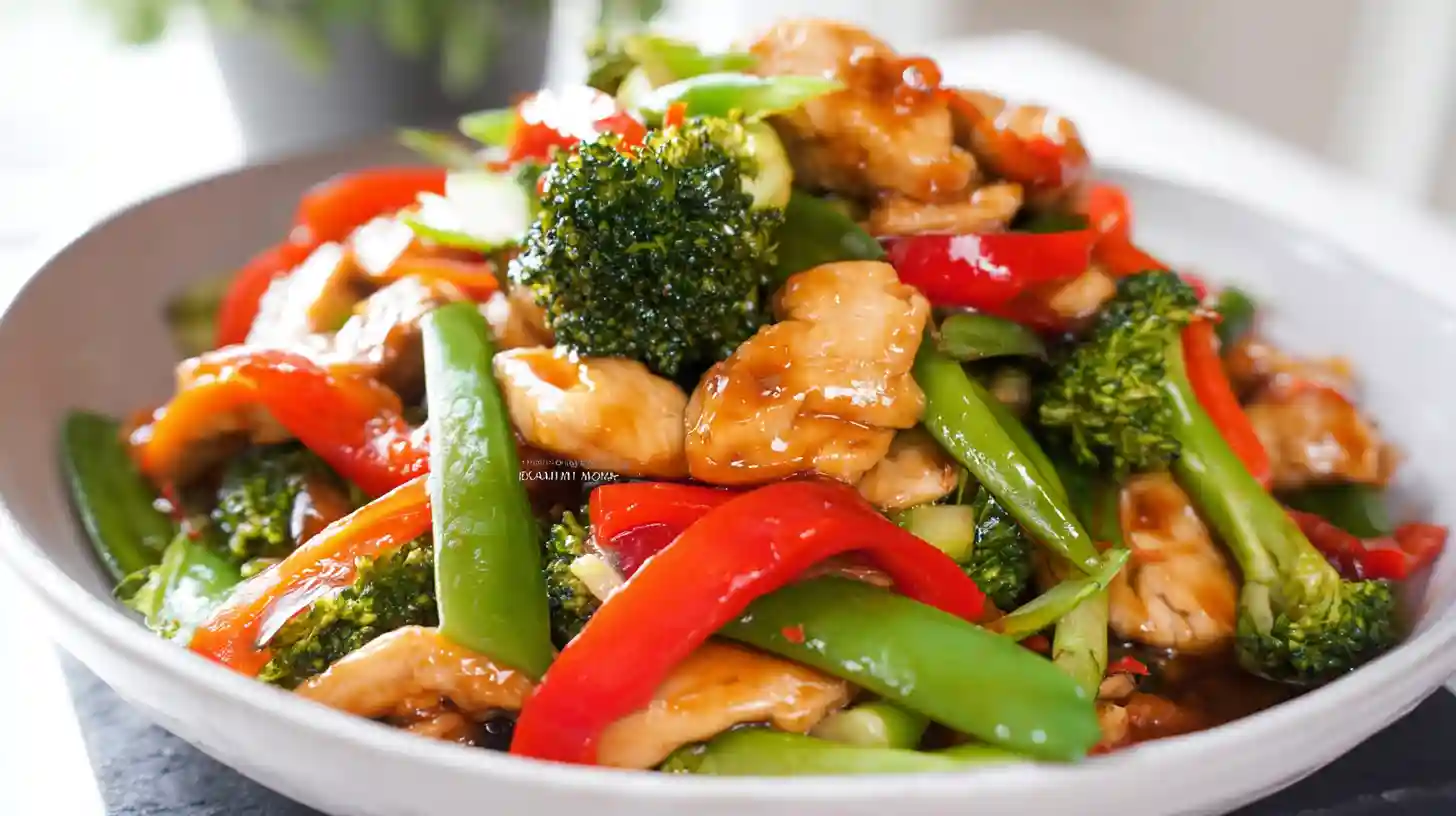

Chicken with Mixed Vegetable Stir Fry
Ingredients
Equipment
Method
- Whisk together the soy sauce, chicken broth, oyster sauce, cornstarch, and sesame oil in a small bowl until smooth. Set aside.
- Heat 1 tablespoon of oil in a wok or large skillet over medium-high heat. Add the chicken and cook for 4-5 minutes until browned and cooked through. Remove chicken from the pan and set aside.
- Add the remaining tablespoon of oil to the same pan. Add carrots and broccoli. Stir fry for 2 minutes. Add bell pepper and snap peas, cooking for another 2-3 minutes until veggies are crisp-tender.
- Stir in the garlic and ginger, cooking for 30 seconds until fragrant.
- Return the chicken to the pan. Give the sauce a quick whisk and pour it over the mixture. Toss everything together for 1-2 minutes until the sauce thickens and coats the ingredients glossy.
- Serve immediately over steamed white rice.
Notes
- Slice chicken partially frozen to get thinner, more even slices.
- Do not overcook the vegetables; they should retain a vibrant color and crunch.