
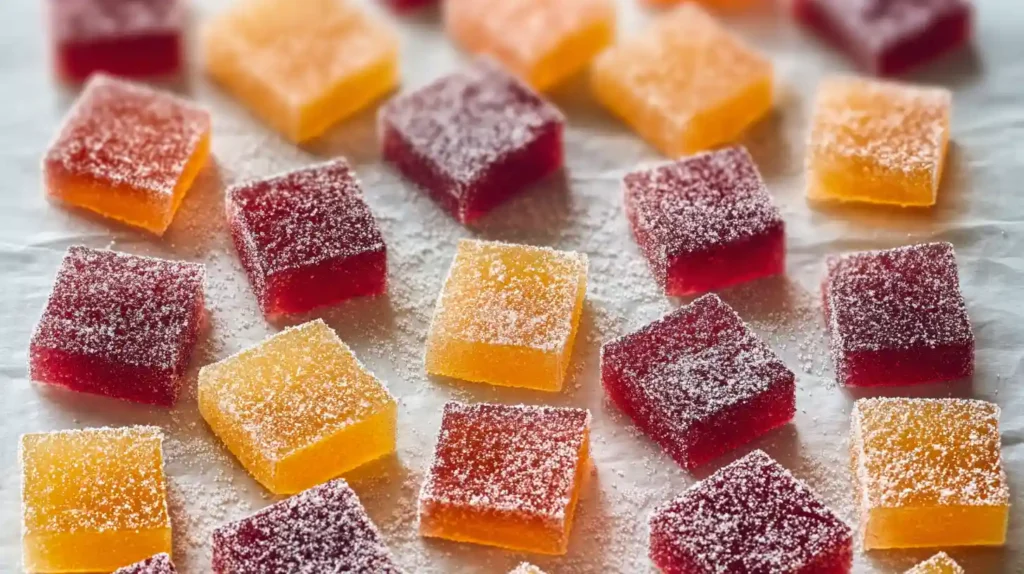
There is something incredibly sophisticated about a box of Pâtes de Fruits. If you have ever walked past a high-end confectionery window and seen those glowing, jewel-like squares of fruit jelly, you know exactly what I mean. They look intimidatingly perfect, like edible stained glass. But the truth is, making these French treats at home is a surprisingly attainable project that makes you feel like a master pastry chef. Unlike standard gummy candies that rely on gelatin, these beauties use pectin to achieve a texture that is tender, melting, and intensely fruity.
I started making these because I wanted Sweet Snack Ideas that were not just empty sugar. While they are definitely a treat, the primary flavor here is real, concentrated fruit. You get that burst of summer berries or bright citrus in the middle of winter, which is magical. This recipe avoids corn syrup, sticking to a traditional method that lets the natural acidity and sweetness of the fruit shine through. It is precise work, yes, but the payoff is a batch of Fruit Candy that tastes better than anything you can buy in a bag.
Why This Pâtes de Fruits Recipe Works
Many Gummy Candies can turn out rubbery or tough if you are not careful. This method relies on the specific chemistry between pectin, sugar, and acid. By using yellow pectin (or standard apple pectin) and cooking the mixture to a precise temperature, we get a set that is firm enough to cut but soft enough to yield instantly when you bite it. It is less like a bouncy bear and more like a soft Fruit Caramel Candy that dissolves on your tongue.
We also skip the glucose syrup often found in industrial recipes. Instead, we rely on a generous amount of sugar and a splash of lemon juice to prevent crystallization. This keeps the ingredient list clean and accessible for a home cook who might not have a pantry full of specialty syrups.
Ingredients for Fruit Jellies
The ingredient list is short, but precision is non-negotiable here. A kitchen scale is your best friend for this Gummy Recipe.
- 500g fruit puree (raspberry, apricot, or mango work best)
- 550g granulated sugar (divided use)
- 15g yellow pectin (or high-quality apple pectin)
- 10ml lemon juice (freshly squeezed)
- Extra sugar for coating (about 1 cup)
Step-by-Step Instructions
1. Prepare Your Mold
Line an 8×8 inch square baking pan with parchment paper. Grease the paper very lightly with a neutral oil to ensure the fruit paste releases easily later. Have all your ingredients weighed and ready before you turn on the stove.
2. Mix Pectin and Sugar
In a small bowl, whisk the pectin with about 50g of the granulated sugar. This is a crucial step. If you dump pure pectin into hot liquid, it clumps instantly. Mixing it with sugar separates the granules, allowing them to dissolve smoothly into the fruit.
3. Heat the Fruit
Pour the fruit puree into a heavy-bottomed saucepan and set it over medium heat. When the puree is warm (around 120°F or warm to the touch), rain in the pectin-sugar mixture while whisking constantly. Bring the mixture to a boil, whisking frequently to ensure the pectin is fully hydrated.
4. The Big Boil
Once boiling, add the remaining 500g of sugar in two batches, stirring well after each addition. Clip a candy thermometer to the side of the pot. Cook the mixture over medium-high heat, stirring often to prevent scorching at the bottom.
5. Target Temperature
Cook until the mixture reaches exactly 223°F (106°C). This can take 15 to 20 minutes depending on your stove. As soon as it hits the temperature, stir in the lemon juice and cook for just 30 more seconds. Pour the hot mixture immediately into your prepared mold. Do not scrape the bottom of the pot too aggressively if there is any scorched fruit.
The Science of Setting
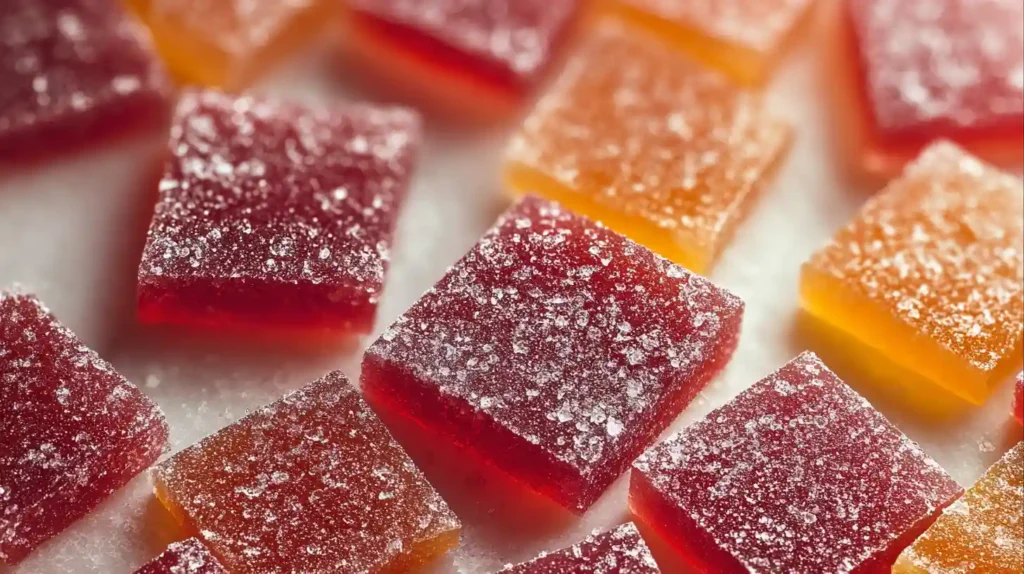
The magic of Making Gummy Candy with pectin lies in the “acid shock.” The pectin needs both high sugar content and acidity to form a gel structure. That final addition of lemon juice triggers the setting process. If you skip it, or if your fruit is not acidic enough (like pear or peach), your jellies might stay soft. For low-acid fruits, you might need slightly more lemon juice to get that perfect sliceable texture.
Cutting and Sugaring
Let the block set at room temperature for at least 24 hours. Do not refrigerate it, as the humidity will make the candy weep. Once firm, lift the block out using the parchment paper. Cut it into 1-inch squares using a sharp knife. If the knife gets sticky, wipe it with a damp cloth between cuts.
Toss the squares in granulated sugar immediately. For a finer finish, you can blitz your coating sugar in a food processor for a few seconds to make it smaller than regular table sugar but coarser than powdered sugar. This creates Sugared Fruit that sparkles and has a lovely crunch.
Variations for Adventurous Cooks
Once you master the base, you can get creative. Some traditional French recipes incorporate nuts. You could stir in toasted pistachios or pine nuts right before pouring the mold to create a sort of Pine Nut Candy hybrid. The crunch of the nut against the soft jelly is fantastic.
For those looking for Fruit Desserts Healthy options, you can experiment with lower sugar pectins, but be warned: traditional Pâtes de Fruits rely on sugar for preservation and texture. Reducing sugar too much will result in a fruit mash that spoils quickly.
Troubleshooting Common Issues
Even with a thermometer, things can go wrong. Here is how to fix them.
- The jelly is weeping: This usually means the mixture did not cook long enough to evaporate the water, or the room is too humid. Store them in a single layer with parchment between them.
- The mixture is grainy: The sugar recrystallized. This happens if you stir firmly against the side of the pot where sugar crusts form. Keep your stirring to the liquid center.
- It won’t set: You likely missed the target temperature of 223°F. Unlike gelatin gummies, you cannot easily remelt and reset pectin jellies once the acid is added.
FAQ
Can I use frozen fruit?
Yes, frozen fruit works perfectly. Thaw it completely and puree it. In fact, frozen fruit often yields consistent results because it is picked at peak ripeness.
How long do they last?
When stored in an airtight container at room temperature, they can last for 2 to 3 weeks. If you live in a humid climate, silica gel packets in the container can help keep them dry.
Do I really need a thermometer?
For this recipe, yes. The difference between a loose jam and a firm jelly is only a few degrees. Guesswork usually leads to disappointment here.
Can I use regular gelatin instead?
No, gelatin requires a completely different method and ratio. This recipe is specifically designed for pectin to achieve that classic vegan-friendly texture.
Why is my sugar melting off the candy?
This happens if you sugar them too early or if the jelly is weeping moisture. Let the cut squares dry out on a rack for an hour or two before rolling them in sugar to minimize this.
Is this safe for kids?
Absolutely. It is free from artificial dyes and preservatives. It is a fantastic project to show older kids the science of cooking temperature.
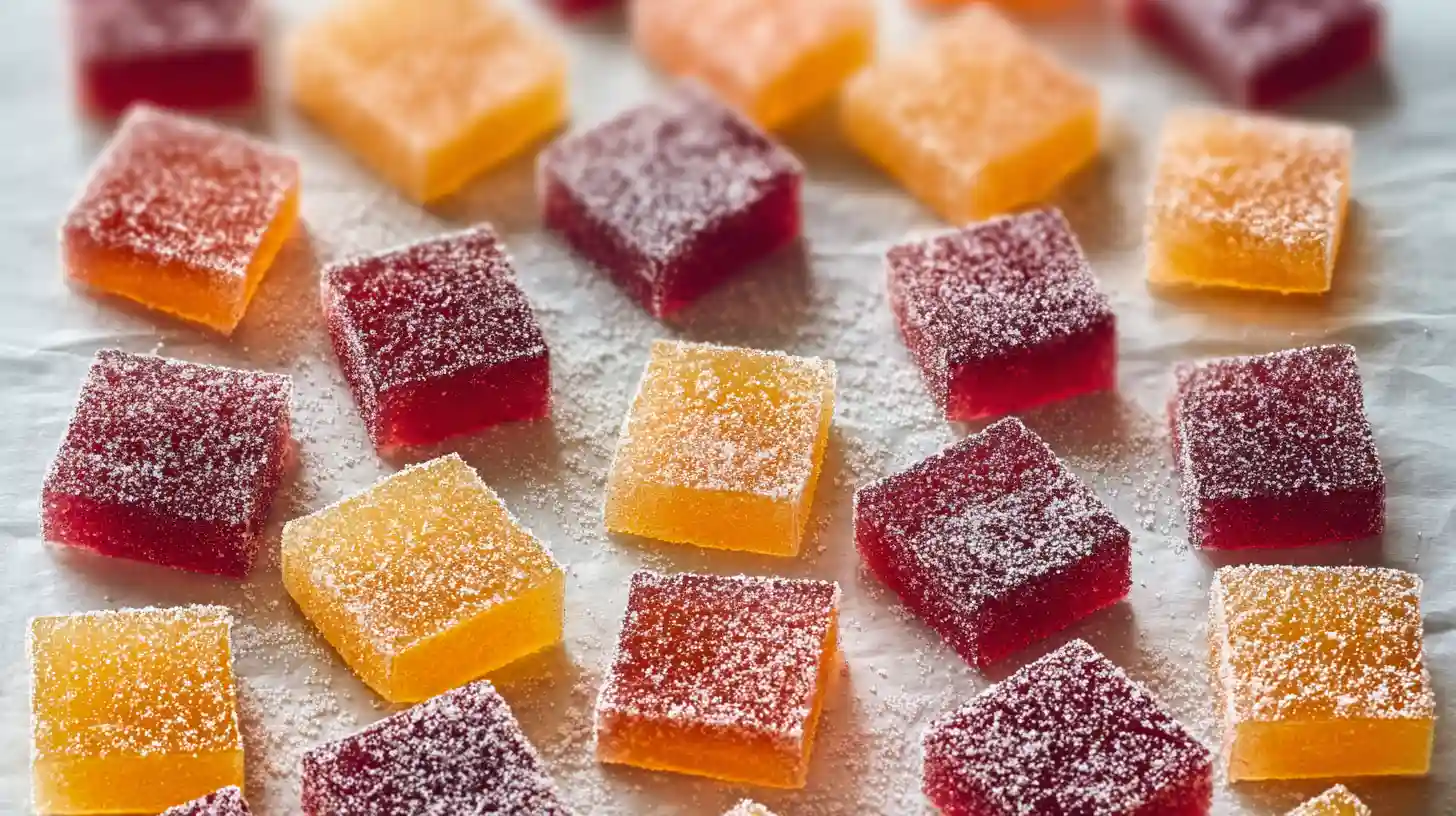

Homemade Pâtes de Fruits
Ingredients
Equipment
Method
- Prepare an 8×8 inch pan by lining it with parchment paper and lightly greasing it.
- Whisk the pectin with 50g of the sugar in a small bowl to separate granules.
- Heat the fruit puree in a saucepan until warm (approx 120°F/50°C).
- Whisk in the pectin-sugar mixture and bring to a boil.
- Add the remaining 500g sugar and cook to exactly 223°F (106°C).
- Stir in the lemon juice and pour immediately into the prepared mold.
- Set for 24 hours, then cut into squares and roll in coating sugar.
Notes
- Humidity affects setting; avoid making on rainy days if possible.
- Do not scrape the bottom of the pot to avoid burnt bits.