
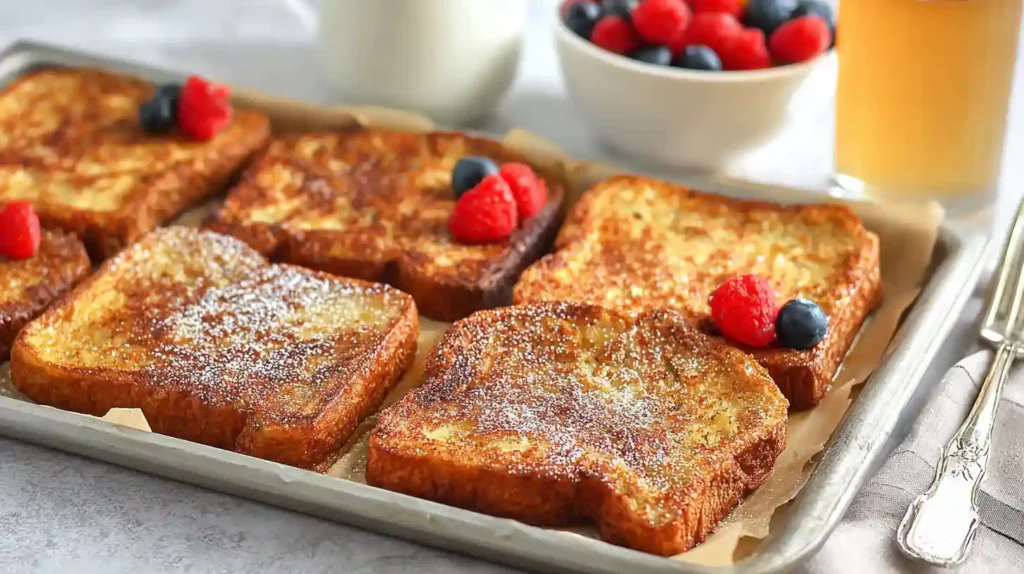
Standing over a hot stove flipping individual slices of bread is not my idea of a relaxing weekend morning. Usually, by the time the last piece is golden brown, the first batch is cold or soggy. That is exactly why I switched to making Sheet Pan French Toast. This method allows you to cook an entire loaf of bread at once, ensuring that everyone sits down to a hot, fresh breakfast together. It completely removes the “short-order cook” feeling from your Sunday routine.
The result is surprisingly similar to the traditional stovetop version, but with a slightly more custodial center and edges that get beautifully crisp from the hot baking sheet. It is one of those pan breakfast recipes that feels like a cheat code. You do the prep work, slide the tray into the oven, and have twenty minutes to drink your coffee while the kitchen fills with the scent of cinnamon and vanilla.
Why Sheet Pan French Toast Works Best
Baking French toast fundamentally changes the texture in a good way. On the stove, it is easy to burn the outside before the inside is cooked, especially if you are using thick slices of brioche or challah. When you make French toast baked in oven environments, the radiant heat cooks the egg mixture gently and evenly throughout the bread. You get a puffy, soufflé-like interior that creates the best baked french toast recipe experience without any scorched spots.
This method is also incredibly scalable. If you are hosting a brunch or have a large family, you can easily use two sheet pans at once. There is no need to grease the skillet repeatedly or manage heat fluctuations. It is truly a one pan french toast solution that prioritizes your time without sacrificing flavor.
Choosing the Right Bread
The success of your sheet french toast relies heavily on the bread you choose. Standard thin sandwich bread often disintegrates when soaked in the custard mixture. You need something with structure and a tight crumb that can act like a sponge without falling apart.
- Brioche: This is the gold standard. It is rich, buttery, and slightly sweet, which complements the custard perfectly.
- Challah: Similar to brioche but usually dairy-free, challah holds its shape beautifully and browns well.
- Texas Toast: If you cannot find bakery loves, thick-cut Texas toast from the freezer aisle or bread aisle is a sturdy, accessible option.
- Sourdough: For those who prefer a tangier contrast to the sweet syrup, day-old sourdough works well, though it may need a longer soak time.
The Custard Ratio Essentials
A great custard is about the balance of fat and protein. If you use only milk, the toast can taste watery. I prefer a mix of whole milk and heavy cream to add richness. The eggs provide structure, while the flavorings – vanilla, cinnamon, and a pinch of nutmeg – bring the warmth. Do not skip the salt. A tiny pinch of salt is essential to make the sweet flavors pop.
Step-by-Step Baking Instructions
Getting the process right ensures you don’t end up with bread stuck to the pan or centers that are still raw liquid. Follow this flow for consistent results.
1. Prep the Pan
Preheat your oven to 375°F (190°C). Generously grease a large rimmed baking sheet with butter. Do not just use cooking spray here. Smearing cold butter directly on the metal pan helps fry the bottom of the bread, mimicking that skillet taste we love in traditional pan french toast.
2. Make the Custard
In a large shallow bowl or a pie dish, whisk together the eggs, milk, cream, sugar, vanilla, and spices. Make sure the eggs are fully beaten so you don’t get streaks of egg white on your toast.
3. Dip and Arrange
Dip each slice of bread into the custard. If the bread is stale, let it soak for 10 seconds per side. If it is fresh, a quick 2-second dip is enough. Allow the excess to drip off before placing it on the sheet pan. Arrange the slices in a single layer with a little space between them.
4. Bake and Flip
Bake for about 12 to 15 minutes. Then, pull the rack out and carefully flip each slice. This is crucial if your oven bakes french toast unevenly. Return to the oven for another 5 to 8 minutes until the bread is puffed and golden brown.
Troubleshooting Soggy Toast
The most common complaint when one bakes french toast is a soggy center. This usually happens for two reasons: soaking the bread too long or crowding the pan. If your bread is fresh, it will drink up the liquid instantly. A mere dunk is all it needs. Additionally, if the slices are touching on the pan, steam gets trapped between them, preventing those edges from crisping up. Always leave a half-inch gap between slices.
Storage and Reheating
This recipe is fantastic for meal prep. Let the cooked toast cool completely on a wire rack to prevent condensation from making it mushy. Store slices in an airtight container or a freezer bag with parchment paper between layers.
To reheat, avoid the microwave if you want to keep the texture. Place the frozen or refrigerated slices back on a baking sheet at 350°F for about 8 to 10 minutes. You can also pop individual slices in the toaster, which restores the crisp exterior perfectly.
Creative Variations
Once you master the base recipe, you can easily customize it. Here are a few ways to elevate your breakfast.
Berry Crisp: Scatter fresh blueberries or sliced strawberries around the bread on the pan before baking. They will roast and release juices that create a natural syrup.
Cinnamon Sugar Crust: Before baking, sprinkle the top of the wet bread generously with cinnamon sugar. As it bakes, the sugar caramelizes into a crunchy topping similar to crème brûlée.
Savory Style: Omit the sugar and vanilla. Add salt, pepper, and fresh herbs to the egg mixture. Top with grated Parmesan cheese during the last 5 minutes of baking for a savory twist.
FAQ
Can I prepare this recipe the night before?
Yes, you can make a baked french toast recipe overnight style. However, do not soak the bread overnight unless you are making a casserole. Instead, prep the custard and cover it in the fridge. Slice your bread and leave it on the counter to stale slightly. In the morning, just dip and bake.
Why is my French toast sticking to the pan?
The sugar in the custard or bread can caramelize and stick to the metal. To prevent this, ensure your pan is well-greased with butter. You can use parchment paper for easier cleanup, though you might sacrifice a bit of the browning on the bottom.
Can I use frozen bread?
Yes, frozen bread actually works quite well because it is drier. You may need to let it soak in the custard for a few extra seconds to ensure it absorbs enough liquid, but it holds its shape admirably.
How do I know when it is done?
The French toast should look puffed up and golden brown. If you press the center of a slice lightly, it should spring back rather than squishing down and looking wet. The edges should feel firm to the touch.
Is heavy cream necessary?
No, you can use all milk if you prefer. Heavy cream adds richness and helps create a custard-like interior, but whole milk or even 2% milk works fine. Non-dairy milks like oat milk or almond milk are also successful substitutes.
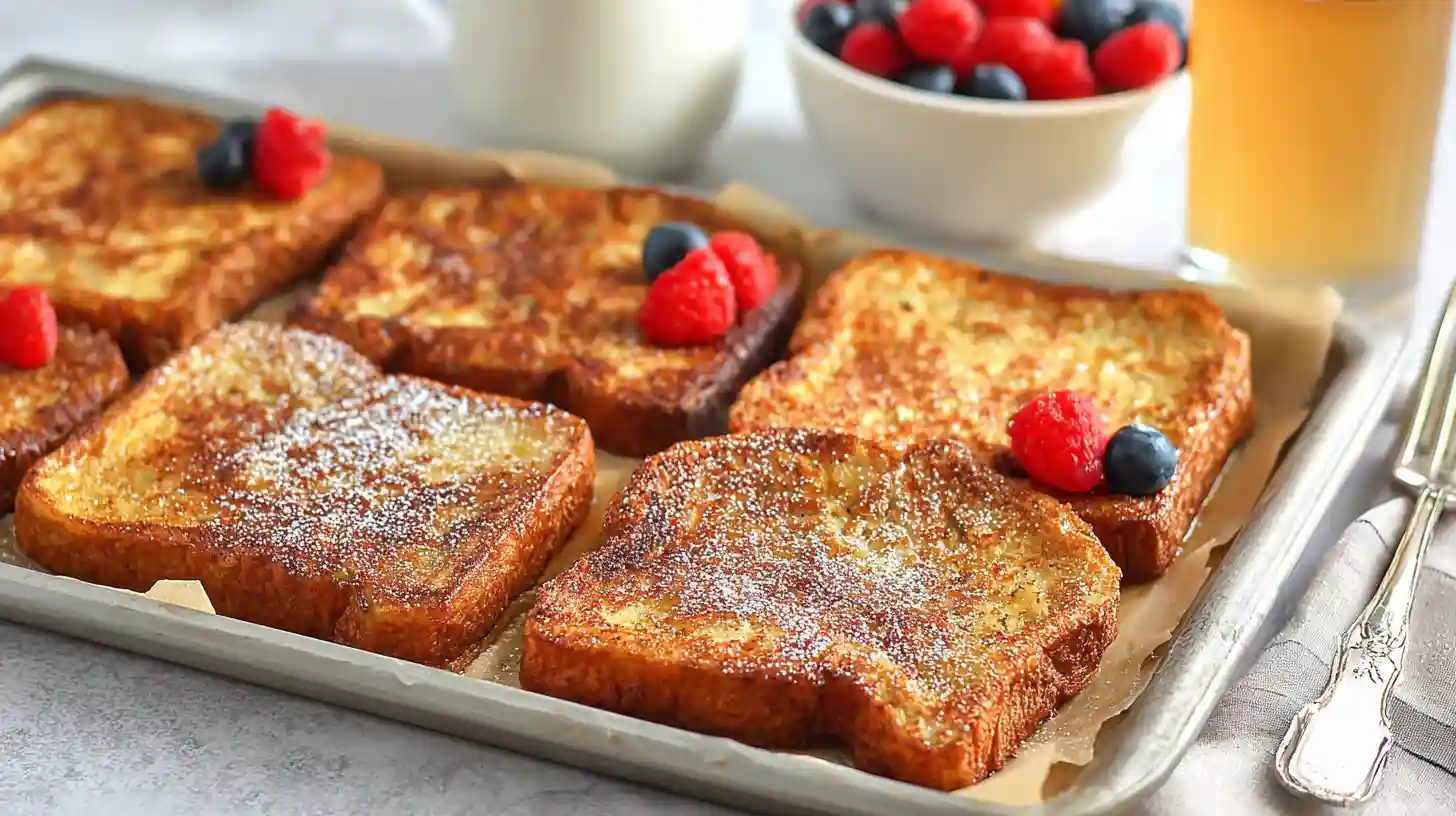

Sheet Pan French Toast
Ingredients
Equipment
Method
- Preheat your oven to 375°F (190°C). Pour the melted butter onto a large rimmed baking sheet and brush it to coat the bottom evenly.
- Whisk the eggs, milk, cream, sugar, vanilla, cinnamon, and nutmeg in a large shallow bowl until fully combined and smooth.
- Dip each slice of bread into the custard mixture. Let it soak for about 2-5 seconds per side depending on freshness. Allow excess to drip off.
- Arrange the soaked bread slices on the prepared baking sheet in a single layer. Ensure they are not overlapping.
- Bake for 12 to 15 minutes. Remove from oven briefly to flip each slice over.
- Return to oven and bake for another 5 to 7 minutes until golden brown and slightly puffed.
- Serve immediately with maple syrup, fresh fruit, or powdered sugar.
Notes
- For extra crispiness, place the sheet pan under the broiler for 1 minute at the very end. Watch closely to avoid burning.